
How to Check Criminal History in Gillespie County
A sound Gillespie County criminal history check begins with a clear question. A recent booking, an incident report, a filed charge, and a statewide conviction entry are different records. The county's online gateway connects readers with Criminal, Jail, Jail Bonds, and Court Calendar searches. Yet the online index is only a finding aid. The identified cause or booking number points to the clerk, sheriff, jail, or police office that holds the source file.
Gather the person's full legal name, any prior names, and a likely date range before searching. A cause number is even better. The county permits an asterisk when the exact spelling is unknown, but broad wildcard results need close review. Match the court, event dates, charge, and status before assuming two similar names refer to one person.
- Open the county Online Records Search gateway and choose the record category that fits the event.
- Search the exact name first. Try a careful wildcard only if spelling is uncertain.
- Record the cause number, court, filing or booking date, charge, and current status.
- Ask the proper custodian for the pleading, judgment, report, booking detail, or certified copy.
- Compare local results with the Texas DPS product or a fingerprint review when statewide scope or identity proof matters.
When the portal has no match, call the proper counter. A false blank can result from choosing the wrong court tier, a spelling variant, a recent filing delay, or a matter held only by the arresting agency. re:SearchTX and TDCJ provide added state-level routes for court or prison records.
Note: A portal result identifies a possible record; a certified file or fingerprint result gives stronger proof of its meaning and identity.
Search Gillespie County Criminal Records Online
The Gillespie County Online Records Search is the main local doorway. It routes users to a Tyler-hosted Courts and Justice Public Access system. Criminal is the right category for filed cases. Jail and Jail Bonds show the local custody and bond slices. Court Calendar helps with scheduled settings. Civil, family, and probate choices are separate and should not be treated as criminal-history results.
The live interface changes its controls by category. Use the visible labels, preserve punctuation in a cause number, and do not infer that a missing document image means no public file exists. Clerk counters can supply an available pleading or certified disposition after the case has been identified.
| Portal field | Use | Search note |
|---|---|---|
| Category | Select Criminal, Jail, Jail Bonds, or Court Calendar | Choose the record stage first |
| Name | Find a person or business entry | An asterisk may replace unknown spelling |
| Case or cause number | Reach one file | Most precise choice when known |
| Date range | Narrow events or settings | Availability depends on category |
| Search and clear | Run or reset the form | Review the selected category after clearing |
The county gateway is shown in its official source view below. It confirms that criminal case, jail, bond, and calendar data are separate search paths.
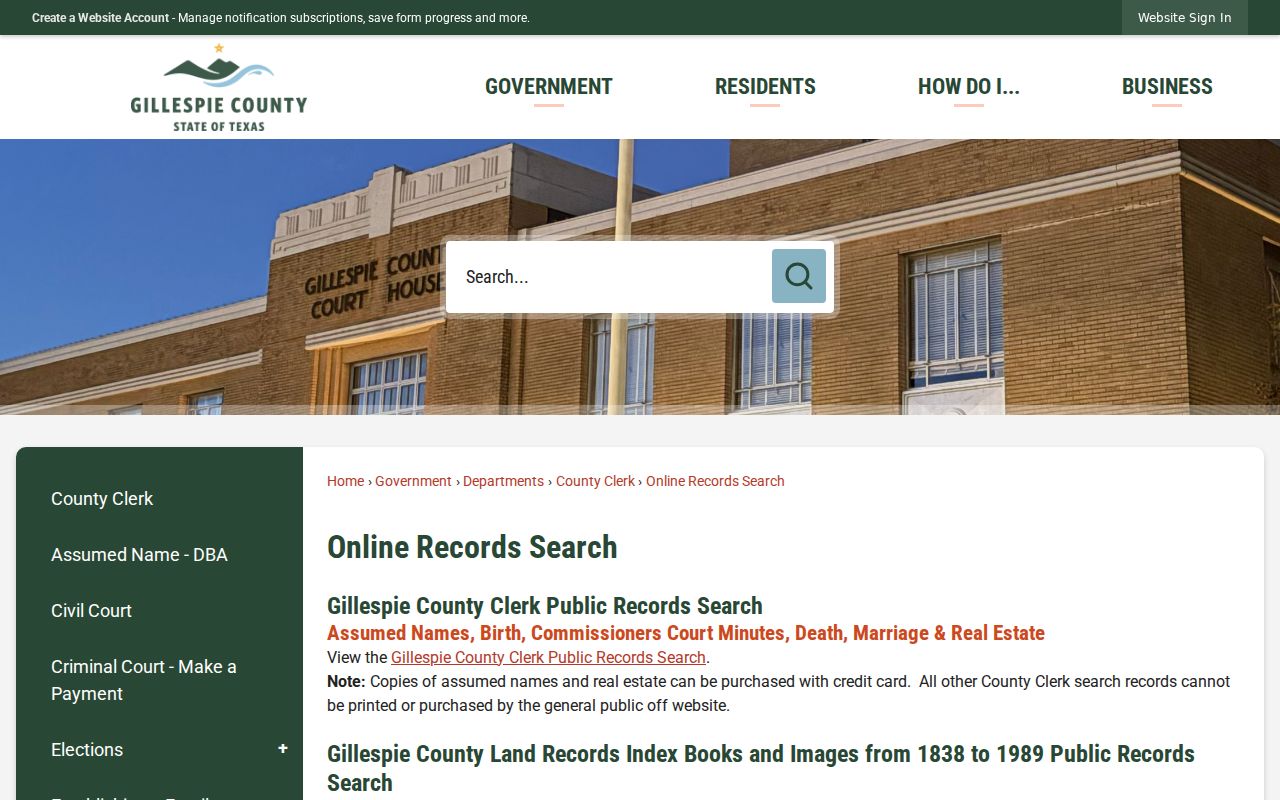
That separation helps prevent a current booking from being mistaken for a court disposition.
Official Texas Background Checks
The Texas Department of Public Safety Crime Records Division maintains the state's Computerized Criminal History repository. Members of the public may create an account at the TxDPS CRD Public Website and use its Criminal History Conviction Name Search. The public product covers reported convictions and deferred adjudications. It does not reproduce every local report, dismissal, pending filing, or protected event.
A public name search is not fingerprint-confirmed. Similar names can produce the wrong match, while a spelling difference or incomplete agency submission can hide the right record. Someone reviewing their own Texas history should follow DPS's personal-review process and submit fingerprints through FAST. The FBI also offers a subject-only national Identity History Summary for a wider personal review.
| Official route | Identity basis | Published cost |
|---|---|---|
| DPS public conviction search | Name | $3 search credit, plus a card charge when applicable |
| DPS personal review through FAST | Fingerprints | Depends on the service code and product |
| Gillespie Sheriff ink fingerprint card | Fingerprints captured only | $6, exact cash or money order |
| FBI Identity History Summary | Fingerprints | $18 FBI fee, plus collection or channeler costs |
| County court portal | Name or cause number | Free search; copy and certification charges may apply |
The DPS public criminal-record landing screen illustrates the account-based state route.
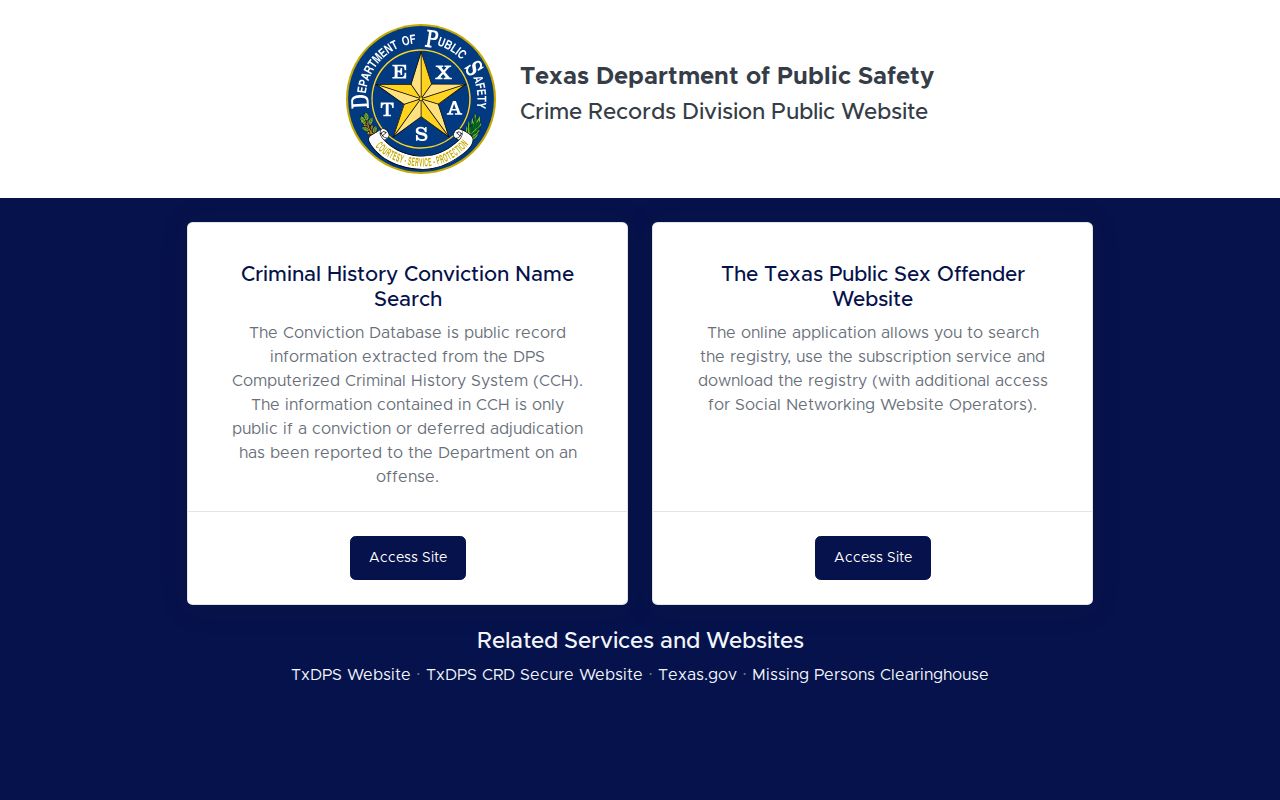
A DPS name result should be checked against identifiers and the originating court before it is relied on.
Gillespie County Fingerprint Record Routes
Two fingerprint services that sound alike serve different ends. FAST, the Fingerprint Applicant Services of Texas program, sends electronic prints through IdentoGO for an authorized DPS product. Enrollment begins with the correct service code. A person reviewing their own record should use the code and instructions supplied by DPS, then take the required identification to the scheduled site.
The Gillespie County Sheriff's local service creates an ink fingerprint card at the Law Enforcement Center. It operates Monday through Friday from 2 to 5 p.m. and costs $6, paid by exact cash or money order. Checks and cards are not accepted. The card service does not itself run a DPS criminal-history search. Call first to confirm the card type and whether the receiving agency accepts ink prints.
The FAST and IdentoGO scheduling page below begins with service-code enrollment and returns the currently available appointment sites.
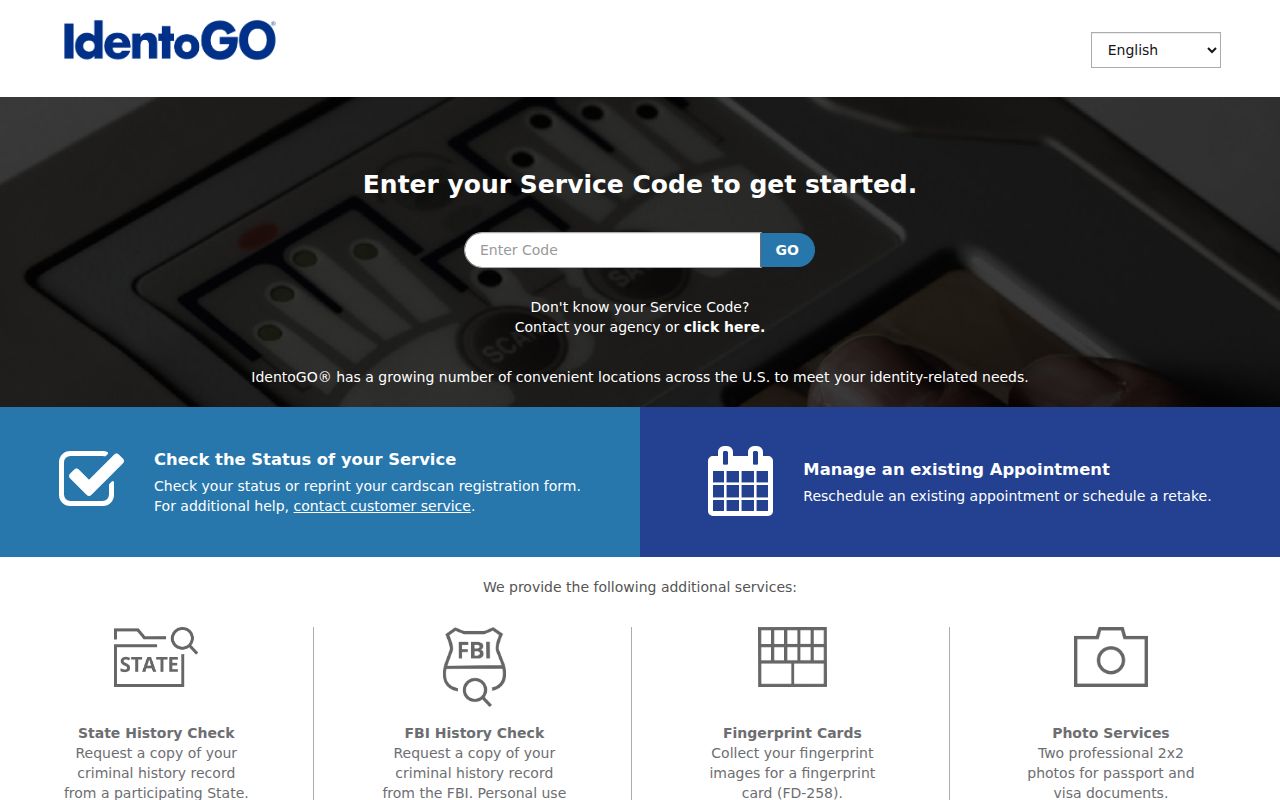
No permanent IdentoGO enrollment site inside Gillespie County was verified, so the live scheduler should control the location choice.
Note: A local ink card is a capture service, while FAST is the electronic submission channel for the DPS product tied to its service code.
Types of Criminal Records
Each Gillespie County criminal record reflects a stage in the justice process. The arresting agency writes an incident or arrest report. The jail creates booking and bond data. A prosecutor files an information, indictment, or other charging paper, and the clerk records the docket, orders, judgment, and sentence. DPS connects reported arrest cycles with later dispositions through fingerprints and a tracking control number.
Custody and supervision records sit elsewhere. The county jail holds current local detention information. The 216th Judicial District Community Supervision and Corrections Department handles adult probation operations across Gillespie, Bandera, and Kerr Counties. TDCJ holds state-prison and parole data. Texas DPS and the local registration authority maintain sex-offender information.
- Incident and arrest reports: agency narratives and probable-cause facts, subject to redaction and active-case limits.
- Booking records: jail intake, initial charges, bonds, fingerprints, and custody status, not proof of guilt.
- Criminal court files: filed charges, settings, motions, outcomes, judgments, and sentences.
- DPS criminal history: reported fingerprint-linked arrest cycles and dispositions, with a narrower public name product.
- Warrant and supervision records: court process, community supervision, prison, parole, and registry data held by different offices.
Federal cases form a separate layer. Gillespie County is in the Western District of Texas, and federal dockets are not stored in the county portal. The PACER federal case-search page appears below.
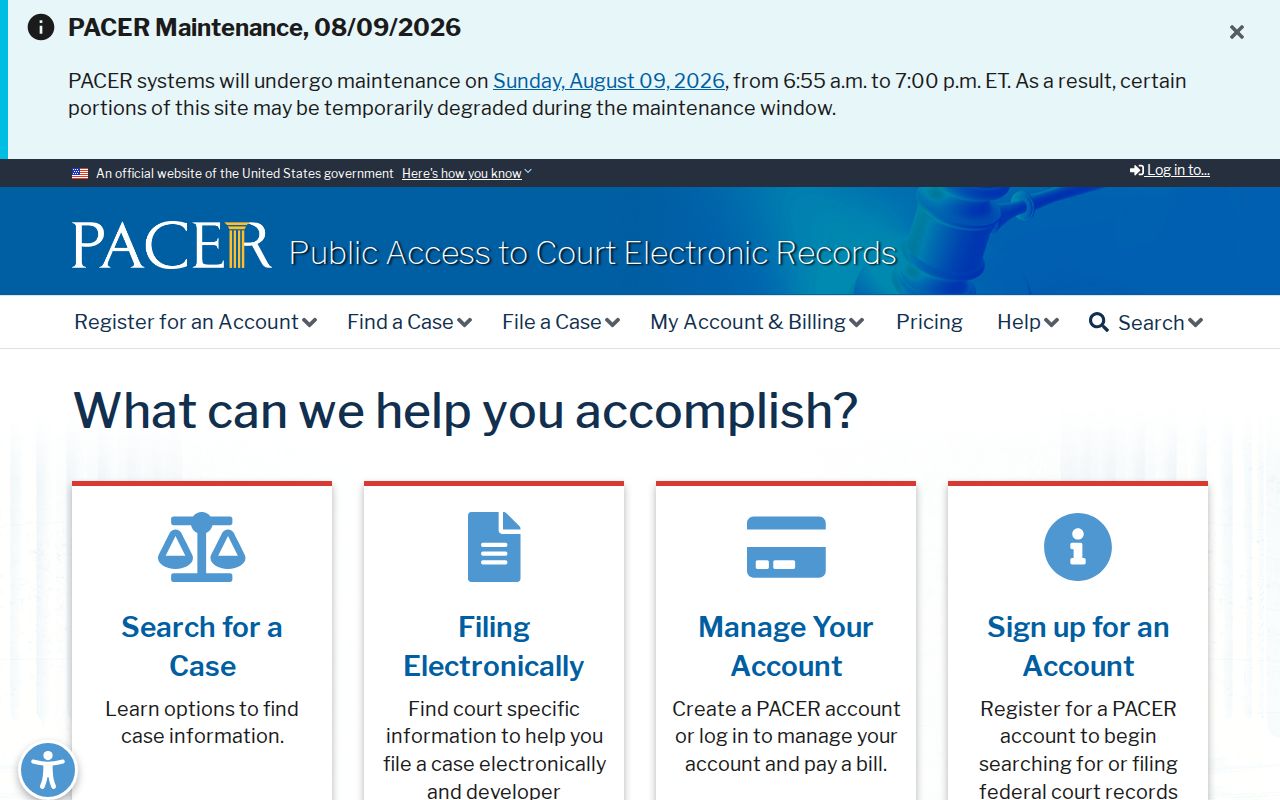
PACER requires an account and applies judiciary fees, while sealed federal documents remain unavailable.
Four Gillespie County Record Keepers
A quick comparison shows why one office cannot answer every Gillespie County criminal records question. The Sheriff's Office and jail preserve law-enforcement and custody material. The District Clerk keeps felony files from the 216th District Court. The County Clerk keeps County Court and County Court at Law misdemeanor matters. Texas DPS maintains the statewide repository. Fredericksburg Municipal Court is a fifth, city-level custodian for its Class C and ordinance cases.
Gillespie County Sheriff and Jail
1601 E. Main Street
Fredericksburg, TX 78624
830-997-7585
Reports, bookings, jail bonds, and warrant routing
Gillespie County Clerk
101 W. Main Street, Room 109
Fredericksburg, TX 78624
830-997-6515
Monday-Friday, 8 a.m.-4 p.m.
Gillespie District Clerk
101 W. Main Street
Fredericksburg, TX 78624
Felony pleadings, judgments, and certified court records
Fredericksburg Municipal Court
103 Industrial Loop, Suite 1000
Fredericksburg, TX 78624
830-997-9935
Class C and city-ordinance cases
The right handoff is straightforward: agency report to booking, booking to prosecutor, filed charge to clerk, and final disposition to DPS. Delays or mismatched identifiers can break that chain, so a county file and a DPS result may differ for a time.
What a Gillespie County Criminal Record Shows
The content depends on the record source. A public Gillespie County case result may show a cause number, court, filing date, status, charge description, docket events, disposition, and judgment. Jail results may show a booking date, arresting agency, intake charge, custody or release status, and bond details. A DPS record is organized around identity and fingerprint-linked arrest cycles. Public access does not expose every internal field.
| Name and identifiers | Legal name, aliases, date of birth, descriptors, and repository numbers where law permits disclosure. |
|---|---|
| Arrest and booking data | Agency, date, booking reference, initial allegation, fingerprint cycle, and bond or custody status. |
| Charges and statutes | Arrest charge, later filed offense, classification, and the cited Texas law. |
| Disposition | Dismissal, plea, conviction, acquittal, deferred adjudication, or another charge-level result. |
| Sentence | Fine, confinement, community supervision, credit, and court-ordered conditions shown in the public judgment. |
| Custody or supervision | County release, state confinement, parole, or a public judgment showing community supervision. |
Read each charge separately. One case can contain several counts with different outcomes. An intake charge can also change after prosecutor review. The filed instrument and final judgment control what the court actually adjudicated.
- Disposition
- The outcome recorded for a charge or case.
- Deferred adjudication
- Community supervision without a final guilt finding after successful completion, though the public DPS product may still show it unless nondisclosed.
- Information
- A prosecutor-filed charging paper commonly used for misdemeanors.
- Indictment
- A grand jury's formal accusation, commonly used in felony cases.
- Expunction
- A court remedy that removes or destroys qualifying records under Texas law.
Gillespie Criminal Records by Phone
The Law Enforcement Center phone tree is a useful fallback when an online search is blank or too new. Call 830-997-7585 and choose option 3 for the Sheriff; the jail route continues through extension 2. The county communications number, 830-990-8793, sends option 2 to jail and option 4 to warrant information. A caller should have the person's name, likely event date, and any booking or cause number ready.
Use the line for the record it can confirm. Jail staff can address public custody and booking status. The Sheriff handles county incident and accident report routes. Warrant staff can give public information about a possible Gillespie County warrant. A Fredericksburg Police report still belongs to Police Records, even though the city police and county sheriff share the same address and main line.
The official Gillespie County Sheriff page documents the Law Enforcement Center contacts and report functions.
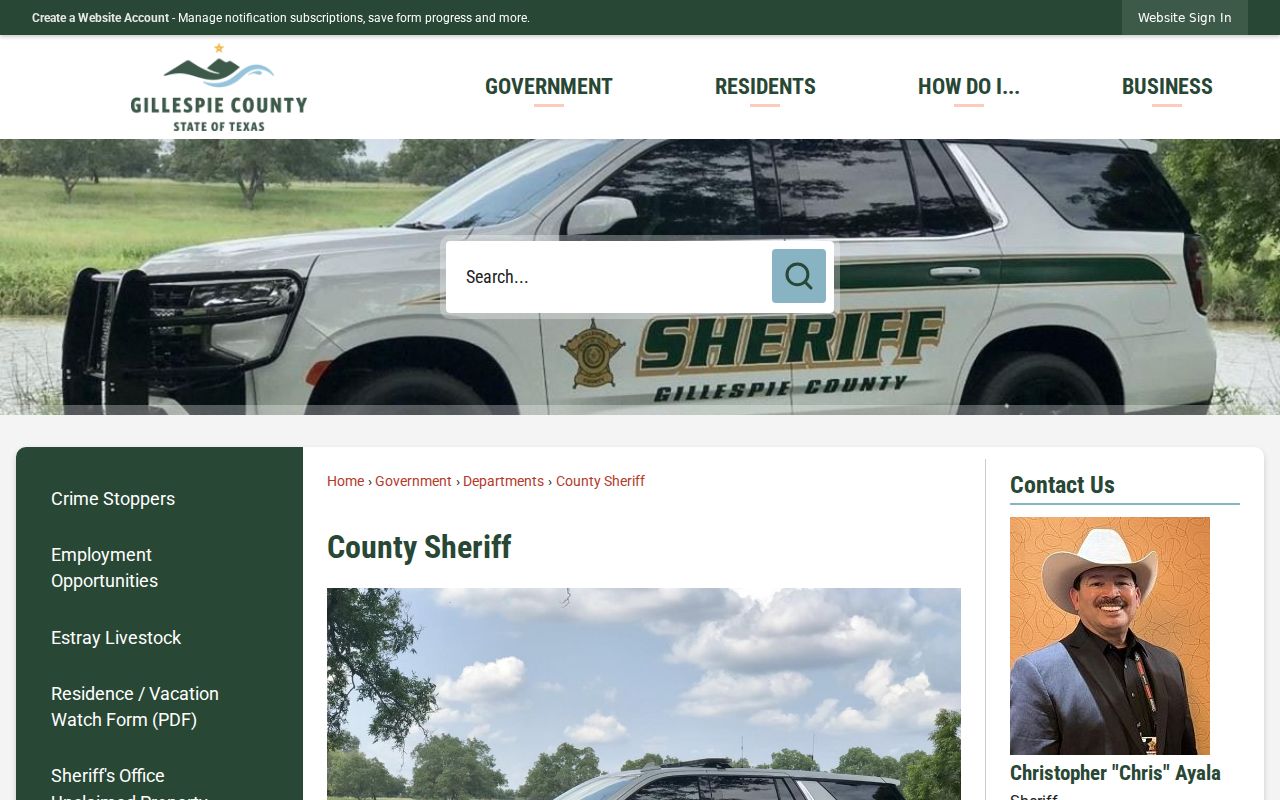
The shared site makes naming the exact custodian especially important in a written request.
Note: An online absence does not clear a warrant; verify it with the issuing court or the county warrant-information line.
Public Access Laws
The Texas Public Information Act starts from access to existing government records, but other laws and exceptions protect parts of a criminal file. A request should identify the agency, event, date range, and record sought. The office does not have to answer questions or create a custom report. It must produce public information promptly, while an office seeking to withhold material generally follows the Attorney General decision process.
Common limits include active-investigation information, confidential identifiers, juvenile law-enforcement records, victim details protected by law, grand-jury material, sealed filings, expunged records, and items covered by nondisclosure. Public court dockets can therefore be broader than a DPS public conviction search in one respect and narrower than an agency's internal file in another.
Key Statutes:
Texas Government Code Chapter 552 gives the public a route to existing government records and sets disclosure procedures.
Texas Government Code Chapter 411 controls access to criminal-history record information and orders of nondisclosure.
Texas Code of Criminal Procedure Chapter 55A sets the current expunction framework.
Texas Code of Criminal Procedure Chapter 62 governs sex-offender registration and public registry duties.
Texas Family Code Chapter 58 protects juvenile justice information from ordinary public release.
Access is record-specific. A released basic report does not make every narrative, identifier, or attachment public. Ask the custodian to explain any redaction or withholding route tied to the requested file.
Gillespie County Clerk Search Rule
The Gillespie County Clerk does not perform a public criminal search for the requester. That policy does not close the records. The visitor searches the county portal or the public access available at the office, identifies the case or instrument, and then asks staff for an available copy or certification. Bring photo identification for a counter transaction.
The rule matters because the County Clerk is the custodian for County Court and County Court at Law misdemeanor files, not felony files. Felony pleadings and judgments go to the District Clerk for the 216th District Court. Class C matters filed by Fredericksburg Police go to Municipal Court. Asking the wrong clerk can produce a correct statement that the office has no file, even when a criminal case exists in another tier.
Statewide searching can supplement the county index. The re:SearchTX portal below offers electronic court access, but coverage and document rights vary by court and user role.
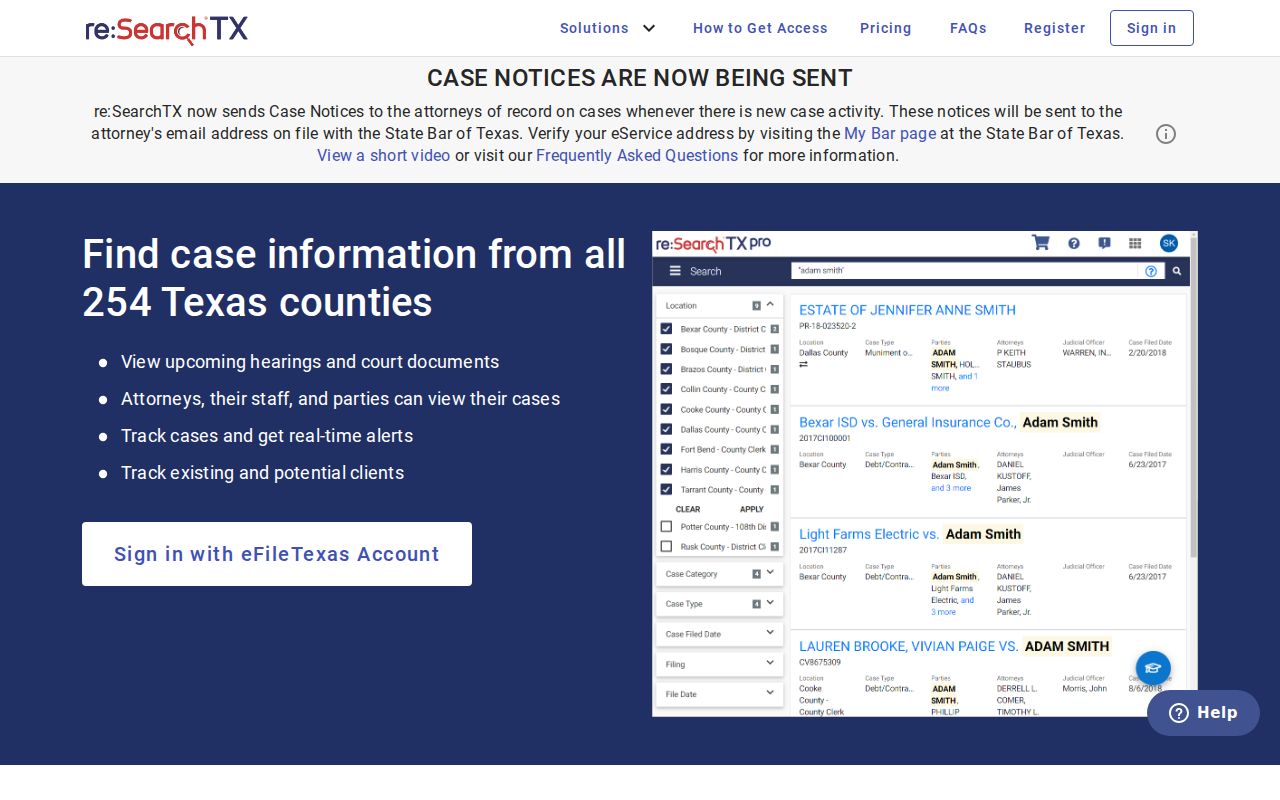
The county portal remains the practical first search for a known Gillespie filing, followed by the correct clerk for the actual file.
Sealed, Expunged, and Restricted Records
Texas distinguishes expunction from an order of nondisclosure. Chapter 55A expunction generally removes or destroys qualifying records across named agencies after a court grants relief. Nondisclosure under Chapter 411 limits ordinary public access to qualifying criminal history but leaves access for agencies and purposes listed by statute. Neither remedy should be assumed from a missing web result.
Eligibility turns on the exact event, charge, disposition, waiting period, and criminal-history context. A dismissal alone does not automatically delete a Gillespie County booking or incident report. Someone reviewing their own history should obtain the certified disposition, compare it with a fingerprint-based DPS personal review, and use the current statute and court process for legal advice about relief.
Juvenile records follow separate confidentiality rules. Grand-jury material, protected victim information, and sealed search warrants can also remain outside ordinary public view. When an order has been granted but a record still appears, retain the signed order and certified case material, then contact the reporting agency and DPS through their correction processes.
Note: Nondisclosure restricts ordinary public release, while expunction is the broader removal remedy for records that meet Chapter 55A.
Gillespie Youth Diversion Records
A county-specific change began January 1, 2025, when Justice of the Peace Precinct 1's Youth Diversion Plan took effect. The plan addresses eligible youth matters, names a diversion coordinator, and allows an active agreement for no more than 180 days. It also includes coordination of expunctions. This is a narrow youth process, not an adult expunction program and not a promise that every youth case will qualify.
Diversion changes the path a qualifying matter may take before a standard adjudication. Parents or participants should keep the agreement, proof of completed terms, court notices, and any expunction order. A portal may not display the same details held in the restricted juvenile file. Questions about a specific case belong with the issuing JP court and qualified counsel, since juvenile information is not released like an adult criminal docket.
The distinction is useful when a name search seems incomplete. Confidentiality may be working as the law requires, rather than showing a gap in Gillespie County criminal record reporting.
Rural Gillespie Criminal Record Routes
Gillespie County covers 1,058.20 square miles and had 26,725 residents at the 2020 census. Fredericksburg is the county seat and the only incorporated city. Outside its limits, there is no separate Harper, Stonewall, Doss, or Luckenbach police department or municipal court. Sheriff, justice court, county court, and district court routes take the place of a city record system.
The US 290 corridor can involve Fredericksburg Police, the Gillespie County Sheriff, Texas DPS Highway Patrol or Rangers, and Texas Parks and Wildlife game wardens. The agency that wrote the report keeps the agency record, even if the person was booked into the same county jail. Ask which agency number appears on the booking or court result before sending a public-information request.
Historic records create another local wrinkle. The 1882 Alfred Giles courthouse now serves as Pioneer Memorial Library, while today's criminal court counters operate from the current courthouse complex. Genealogy work may lead to archives, but a current charge, judgment, or certified disposition belongs with the modern clerk.
Note: County population figures explain jurisdiction and distance; they do not support claims about crime levels without a verified agency-year crime table.
Criminal Records by City in Gillespie County
Fredericksburg is Gillespie County's only incorporated city, so it is the sole city guide. Fredericksburg Police keeps its own incident and arrest reports and accepts written Police Records and Videos requests through JustFOIA. The city does not advertise a separate long-term jail. People arrested by city officers move through the Gillespie County jail, while filed charges go to Municipal Court, County Court, County Court at Law, or the 216th District Court based on offense level.
Fredericksburg Municipal Court became a court of record on July 16, 2024. It handles city Class C misdemeanors and ordinance violations, maintains a formal record, and participates in after-hours magistration for county agencies. The city and county law-enforcement offices share the Law Enforcement Center address, but a request still must name the right custodian.
Fredericksburg Criminal History
County seat and sole incorporated city, with Police Records, JustFOIA, Municipal Court, and county-jail routing.
The city guide stays at city level. Broader jail, court, DPS, warrant, and state supervision routes remain county or state records rather than municipal files.