
Criminal Cases in the Gillespie County Courts
Gillespie County criminal cases split by charge level. The 216th Judicial District Court hears felony indictments and other district criminal matters. The District Clerk is the custodian for those pleadings, orders, dockets, judgments, and sentences. County misdemeanors belong to the constitutional County Court or the County Court at Law, and the County Clerk maintains those criminal files. A searcher who asks the County Clerk for a felony judgment, or the District Clerk for a Class B misdemeanor file, has reached the wrong counter.
Justice of the Peace courts handle fine-only matters within their limited reach. Fredericksburg Municipal Court of Record keeps city-filed Class C misdemeanors, traffic cases, and ordinance matters. Its file is separate from the county clerk's criminal docket. Case numbers, the filing court, and the filed offense level are therefore vital clues. They tell a reader which Gillespie County clerk can supply the authoritative criminal case record.
Which Gillespie Criminal Court Clerk?
The charge level is the fastest routing tool. A felony indictment points to the District Clerk at the courthouse complex. A County Court or County Court at Law misdemeanor points to the County Clerk in Room 109. A Fredericksburg citation for a Class C offense points to Municipal Court at 103 Industrial Loop, Suite 1000. JP matters stay with the precinct that issued the process. The arresting agency does not control this choice. The prosecutor's filed charge may differ from the label used at booking.
The official Gillespie County District Clerk page shows the felony record custodian and current office contact. Its layout also helps confirm the proper destination before requesting a court case record.
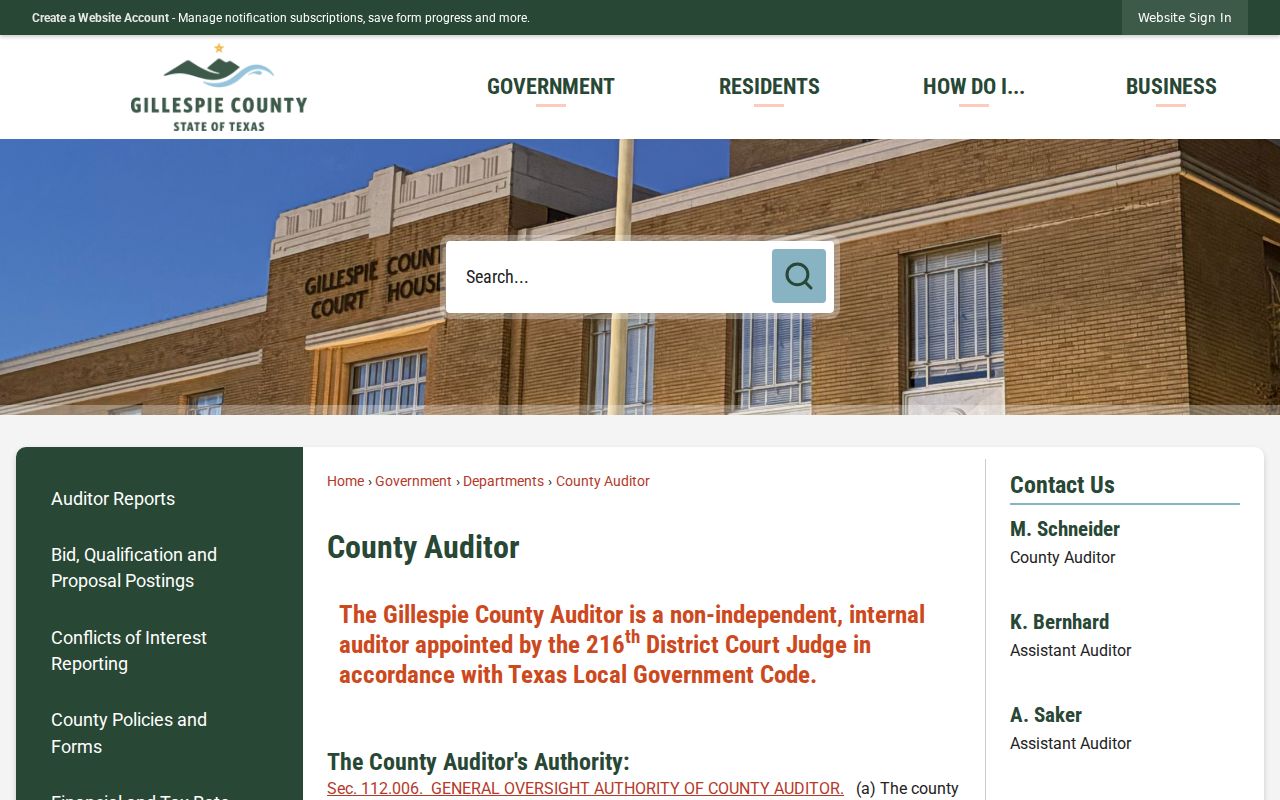
The county page is the safer source for current counter details because room assignments and directory entries can change.
The County Clerk works differently. The office has stated that staff will not perform a public criminal search. A visitor searches online or at the office, identifies the case, and then asks for the needed copy or certification. Bring photo identification for a counter transaction. This self-search rule makes a cause number especially useful.
How to Search Case Records
The main local route is the county's Online Records Search gateway, which links to the Courts and Justice Public Access system. Select the Criminal category rather than Jail or Jail Bonds. Search by cause number when known. For a name search, start with the full legal name and try the county-authorized asterisk wildcard if spelling is uncertain. Write down the court, cause number, charge, filing date, status, and event dates before leaving the result.
- Open Courts and Justice Public Access from the Gillespie County gateway, then select Criminal.
- Enter the cause number, or search the person's name and use an asterisk for an unknown part of the spelling.
- Narrow the results with available date or status controls, then verify the court and filed charge.
- Open the case detail and read docket events, pleas, settings, disposition, judgment, and sentence fields.
- Contact the named clerk with the cause number when a document image, certified judgment, or older file is needed.
| Field Label | Type | Required | Use |
|---|---|---|---|
| Search category | Tab or menu | Yes | Choose Criminal for filed court cases. |
| Name | Text | Conditional | Use a person or business name; an asterisk can replace uncertain spelling. |
| Case or cause number | Text | No | This is the most precise route when known. |
| Date range | Date controls | No | Limits results when the selected category offers it. |
| Search or clear | Button | No | Runs the search or resets the criteria. |
Save the cause number before requesting a copy. It lets the clerk distinguish people with similar names and locate the exact Gillespie County criminal file.
Search Gillespie County Case Records
The Tyler-hosted county portal is a finding aid, not a promise that every document can be viewed online. Its controls can change by category. A criminal result may expose the case header and docket while leaving a pleading or judgment image unavailable. When that happens, retain the cause number and contact the correct clerk. For older records, ask whether the file is on paper, scanned, or held in an archive. Historic district-clerk microfilm exists through state library channels, but it is not the place to seek a current criminal case.
The Gillespie Courts and Justice Public Access interface is the official local search screen.
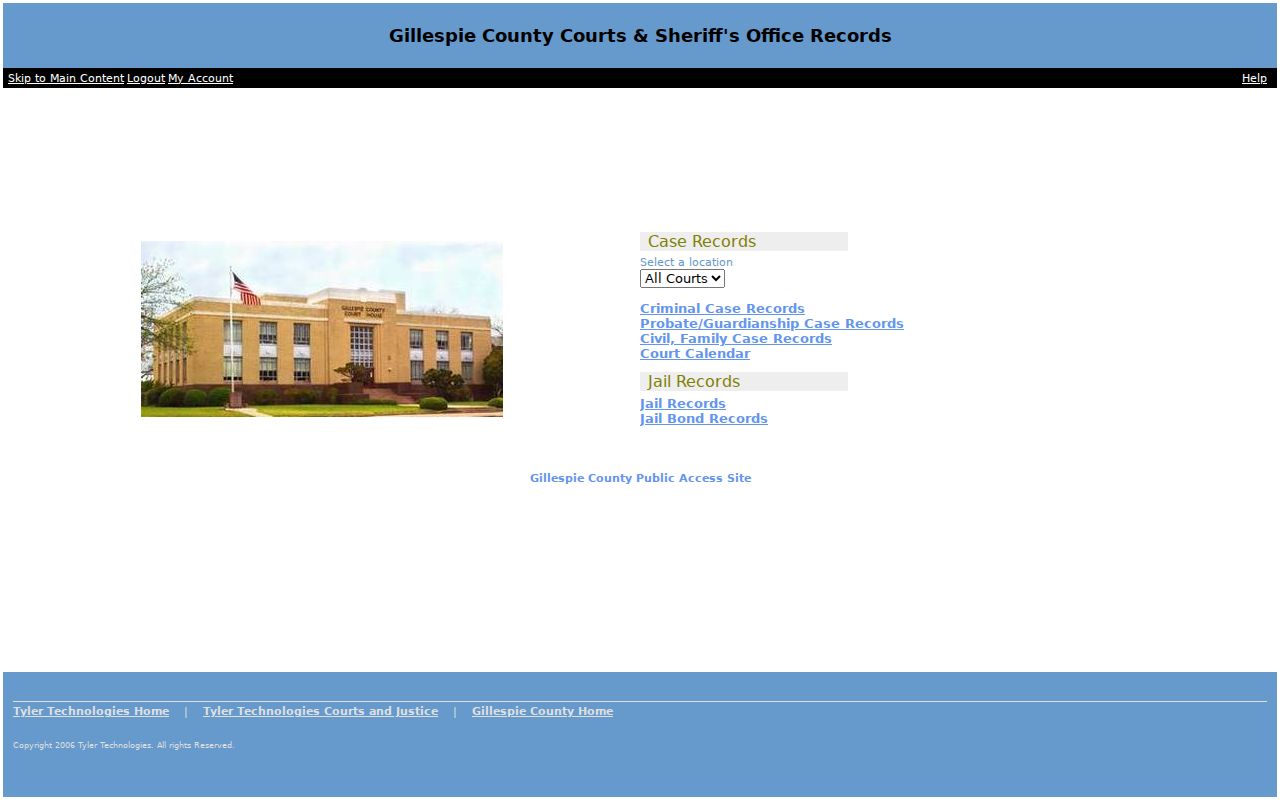
The unified screen also includes jail and bond categories, so check the selected category before treating a result as a filed court case.
re:SearchTX adds a statewide electronic court-record route. Registration is required, and public access or document coverage varies by court and user role. For a Gillespie County criminal matter, the county portal and the local clerk remain the best first pair. Use re:SearchTX when a statewide search is useful or when the local index needs a second check.
What the Case File Shows
A Gillespie County criminal case file tracks the prosecution after filing. It can identify the court, parties, attorneys, filed charge, pleas, settings, motions, disposition, and punishment. The charging instrument is key: a complaint supports initial process, an information commonly charges a misdemeanor, and an indictment is a grand jury's felony accusation. Secret grand-jury deliberations are not part of the public file. Nor does every online index expose every document.
| Cause Number and Court | Identifies the exact Gillespie County case and the clerk responsible for it. |
|---|---|
| Charging Document | Shows the complaint, information, or indictment and the charge actually filed. |
| Docket Entries | Lists filings, settings, notices, motions, pleas, and court actions in date order. |
| Hearing Dates | Records past and scheduled arraignments, pretrial settings, trials, or other proceedings. |
| Disposition and Judgment | States whether a charge is pending, dismissed, acquitted, deferred, or resolved by conviction. |
| Sentence and Conditions | May show confinement, fines, court costs, community supervision, and other terms ordered by the court. |
The financial ledger, linked bond data, and document images appear only where the system enables them. A certified judgment from the clerk is stronger than an index entry when the exact outcome matters.
Gillespie County Felony Case Custodian
The 216th Judicial District covers Gillespie, Kerr, and Bandera Counties, but a Gillespie felony file stays with the Gillespie District Clerk. The District Attorney handles felony prosecution, grand-jury work, pleas, trials, appeals, and related filings. The court file may show an indictment and later judgment even though the original incident report remains with the arresting agency. This split is why one request rarely yields every record created by a criminal event.
The 216th District Court page identifies the felony trial court that serves Gillespie County.
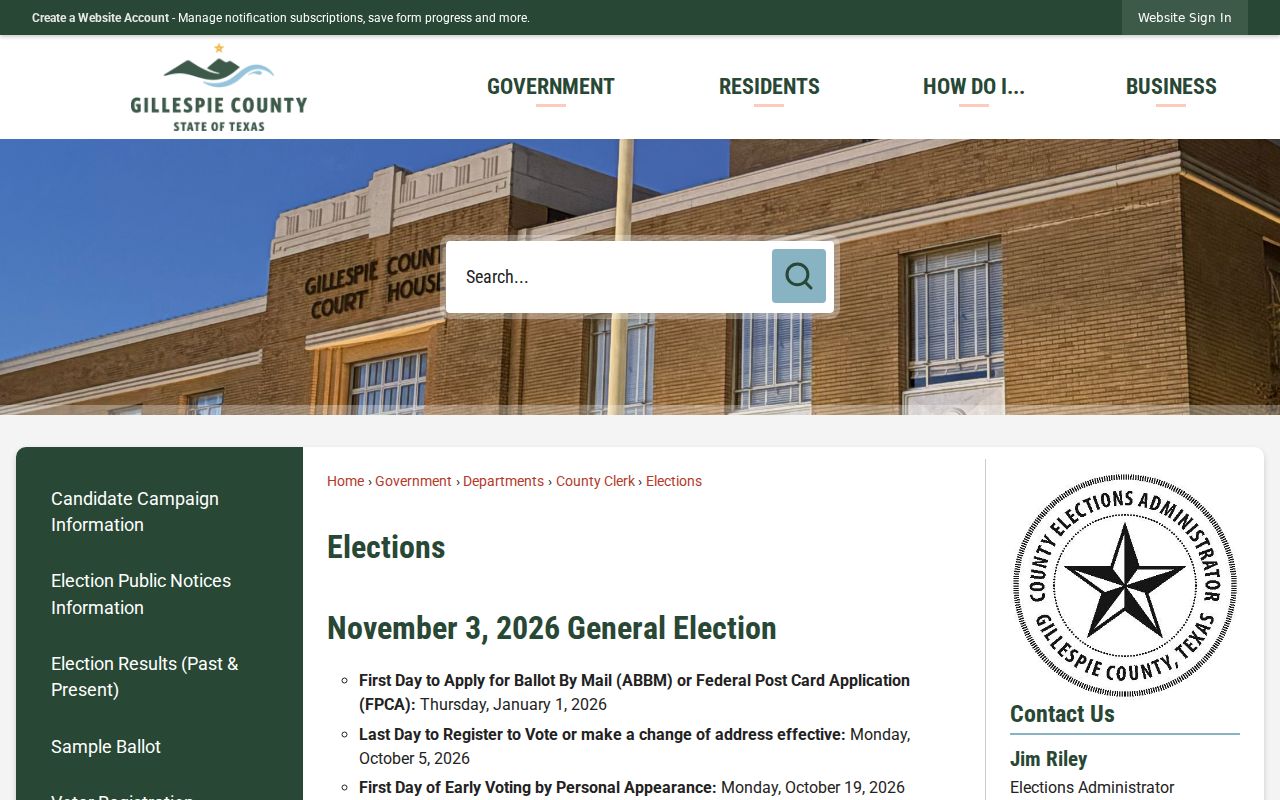
The court page confirms where felony proceedings occur, while the District Clerk supplies the filed criminal case record.
A person who cannot afford counsel asks the magistrate or court about appointed counsel and the financial qualification process. No freestanding Gillespie County public defender office was found. Texas counties may instead use court-appointed private lawyers under an adopted indigent-defense plan. The appointing court, not an invented county agency, controls that process.
Stages of a Criminal Case
A criminal case can begin with an arrest or citation, followed by magistrate warnings, a probable-cause decision, and bond. Texas law generally requires an arrested person to be taken before a magistrate without needless delay and within 48 hours. Prosecutor review comes next. A misdemeanor may proceed by information, while a felony usually moves through a grand jury and indictment. Arraignment, discovery, motions, and negotiations shape the docket before trial or plea.
Case flow: Charges Filed › Arraignment › Pretrial › Plea or Trial › Disposition › Sentencing
A judgment and sentence close the trial stage, but a motion for new trial or appeal can add later docket events. Fredericksburg municipal judges also rotate through after-hours magistrate work for county law-enforcement agencies. That magistrate role does not mean every resulting case stays in Municipal Court. The filed charge still determines the Gillespie County trial tier.
Read Gillespie County Case Dispositions
Disposition terms answer different questions. A dismissal means the charge ended without a conviction, but it does not erase the arrest or booking. A no-bill means the grand jury did not return an indictment. An acquittal is a not-guilty result after adjudication. Deferred adjudication places a person on community supervision without a final guilt finding if completed, yet DPS may still include it in its public product unless a nondisclosure order applies.
- Pending
- The charge remains unresolved. It is not a finding of guilt.
- Dismissed
- The court ended the charge without conviction; separate arrest records may remain.
- No-bill
- The grand jury declined to return a felony indictment.
- Acquittal
- The case ended in a not-guilty adjudication.
- Conviction
- The court entered a final judgment of guilt and a sentence.
Search all relevant court tiers and companion cause numbers before drawing a conclusion. An arrest charge can be changed, rejected, split, or enhanced when the prosecutor files the case. The Gillespie County arrest history explains the earlier booking record, while the criminal court file gives the filed charge and judicial outcome.
Note: A dismissal closes a charge but does not by itself remove the related agency and jail records.
Access & Restrictions
Texas law supports public access to many filed records, but access is not absolute. Government Code section 552.021 provides a right to inspect or copy public information unless an exception applies. Court case records also follow Texas judicial and court-specific access rules. Juvenile material, victim-identifying data, personal identifiers, sealed content, and records covered by an expunction or nondisclosure order can be withheld or removed from an ordinary public view.
For law-enforcement material outside the filed case, section 552.108 may protect information when release would interfere with a matter or another exception applies. Ask the clerk about a missing case file and the arresting agency about its own report. A clerk may provide a public docket while redacting protected fields from a copy.
Gillespie County Certified Case Copies
Start a copy request with the cause number, court, case year, and precise document name. A docket sheet, information, indictment, judgment, and sentence serve different needs. Ask for certification only when an official certified copy is needed. The District Clerk's published fee sheet includes a one-dollar-per-page charge for preparing a clerk's record on appeal, but that appellate price must not be treated as the fee for every ordinary criminal copy. Request a current quote from the right clerk.
The Gillespie County Clerk page explains its criminal search rule, counter address, and office hours.
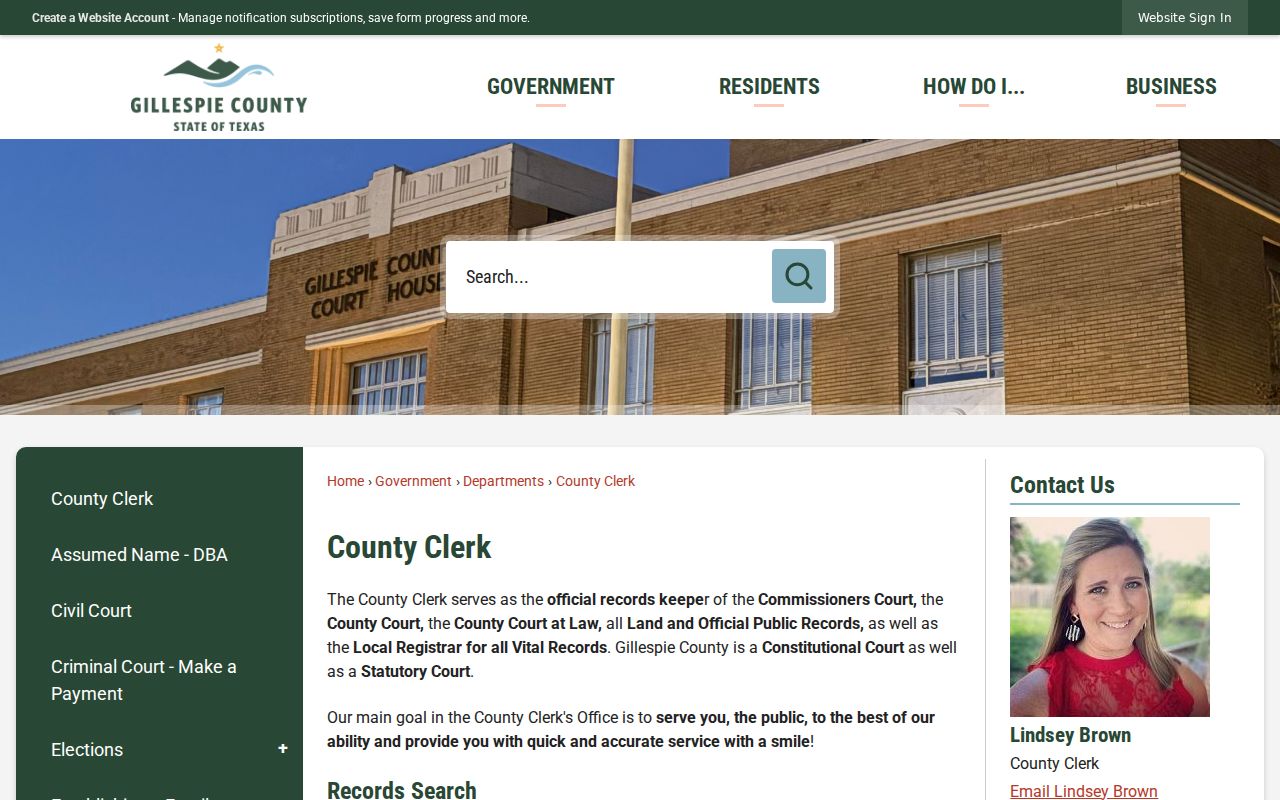
The office expects the requester to identify the case before staff prepares the selected record or certification.
County Clerk Criminal Files
101 W. Main Street, Room 109, Mail Unit 13
Fredericksburg, TX 78624
830-997-6515
Monday through Friday, 8 a.m. to 4 p.m.
District Clerk Felony Files
101 W. Main Street
Fredericksburg, TX 78624
830-307-3772
Confirm the current room and counter before travel.
Photo identification is required for County Clerk transactions. Call ahead when an archived file or a large copy order may need staff preparation.